Tiny Hugs Review
As a designer who’s spent years working on brand identities, packaging, and digital assets, I’ve seen my fair share of fonts. Tiny Hugs is one that stands out—not because it’s flashy or over-the-top, but because it feels genuine, approachable, and surprisingly versatile. This free font from the Freebies category has a soft, friendly energy that makes it ideal for projects aiming to feel warm and inviting.
The First Impression
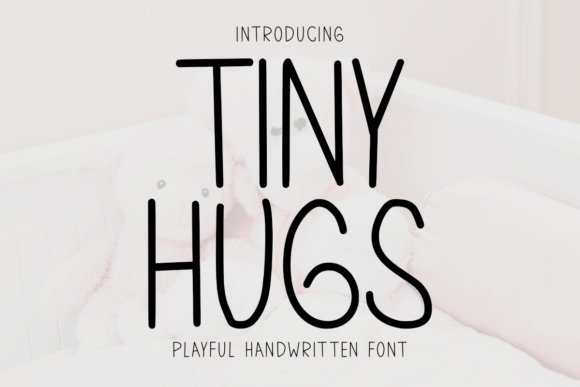
When I first laid eyes on Tiny Hugs, its delicate curves and rounded edges immediately evoked a sense of comfort. It doesn’t scream attention, but it doesn’t fade into the background either. The letters feel like they were hand-drawn with care, giving it a personal, almost handmade quality. This makes it perfect for projects that want to feel authentic rather than polished or corporate.
It leans more toward a creative font than a premium font, which means it’s not ideal for high-end branding or formal documents. But for casual, playful, or community-driven projects, it’s a strong choice. The visual personality of Tiny Hugs is gentle, making it a natural fit for children’s products, indie brands, or anything with a cozy, accessible vibe.
Real-World Performance
In practical use, Tiny Hugs shines in smaller text sizes and short phrases. It works well as a display font for headings, banners, or social media graphics where the message needs to feel light and engaging. However, it’s not the best option for large headlines or long paragraphs. Its thin strokes and soft shapes can become hard to read when scaled up or used in dense blocks of text.
For logo design, Tiny Hugs could work if the brand wants to emphasize friendliness or a personal touch. But it’s not suitable for brand marks or logos that require clarity and scalability. In packaging design, it might be a good fit for labels or product tags, especially for small businesses or crafters looking to add a unique flair without breaking the bank.
When used in editorial design, such as blog graphics or magazine layouts, Tiny Hugs can add a charming contrast when paired with more structured typefaces. It also performs well in printable design and digital products where the goal is to evoke warmth and personality.
Where to Use It Carefully
While Tiny Hugs is great for certain applications, there are areas where it may fall short. Large headlines, for example, can lose their legibility if not carefully spaced. Short phrases and quotes might look too whimsical if the context requires a more serious tone. Premium packaging or high-end marketing materials may benefit from a more refined typeface instead.
Social posts and supporting text are other areas where Tiny Hugs could be overused. It’s easy to lean on a cute font for every project, but doing so can dilute the overall design language. Instead, use it as a highlight or accent rather than the main text.
Readability and Brand Consistency
Readability is one of the most important factors in any typeface, and Tiny Hugs isn’t the strongest performer in this area. At smaller sizes, especially in black and white, the details can get lost. This means it’s best used in contexts where the text isn’t too dense and the surrounding design can help guide the eye.
Brand consistency is another consideration. If a brand relies on clear, professional typography, Tiny Hugs may not align with that identity. However, for brands that embrace a more informal or artisanal aesthetic, it can be a valuable tool for reinforcing that visual personality.
Design Notes and Practical Tips
Before using Tiny Hugs in a client project or business asset, test it in different scenarios. Try it in black and white to see how it holds up without color. Check small-size readability—especially if it will be used in print or on mobile screens. Mockups are essential to understand how it interacts with other design elements.
Compare it with uppercase and lowercase versions to see how it balances visually. Also, test it beside serif fonts, sans serif fonts, script fonts, and handwritten fonts to find the right pairing. For commercial use, always confirm the licensing terms to ensure it’s suitable for your intended application.
Overall, Tiny Hugs is a fun, expressive font that adds character to the right project. It’s not a one-size-fits-all solution, but when used thoughtfully, it can bring a fresh, friendly energy to design work.
Final Thoughts
Tiny Hugs is a standout among free fonts, offering a unique blend of charm and usability. It’s not meant for everything, but for the right audience and purpose, it can be a powerful addition to a designer’s toolkit. Whether you’re working on a Canva template, a Cricut project, or a digital product, Tiny Hugs has the potential to elevate your design with its soft, inviting presence.
As with any font, the key is to use it intentionally. Pair it wisely, respect its limitations, and let it shine where it belongs. For designers looking to add a touch of warmth to their work, Tiny Hugs is definitely worth a try.